Saturday

The Industrial Revolution Unplugged: An Interview With Author Gregory Clark

The topic below was originally posted in my blog the Intrepid Liberal Journal as well as the Independent Bloggers Alliance, The Peace Tree and Worldwide Sawdust.

Our current world of globalization, technological advancement and the widening schism between rich and poor stems from the Industrial Revolution. Indeed, the Industrial Revolution is arguably the most important historical watershed in human history. So why did it happen in eighteenth-century England? Furthermore, how come the unprecedented economic growth it produced only served to make parts of the world even poorer?

Conventional wisdom is that the Industrial Revolution resulted from the development of stable, political, legal and economic institutions in seventeenth-century Europe. Many assume factors such as geography, natural resources or exploitation were behind the Industrial Revolution. A decade ago, Jared Diamond postulated in his best selling and Pulitzer prize winning book, Guns, Germs, and Steel: The Fates of Human Societies, that natural endowments such as geography were largely responsible for differences in the wealth of nations.

Gregory Clark, a professor of economics at the University of California, Davis as well as department Chair, is posing a direct challenge to Diamond and our longstanding belief of why the Industrial Revolution happened. In his recently published book, A Farewell To Alms: A Brief Economic History of the World (Princeton University Press), Clark contends that culture not imperialism or geography explains the wealth and poverty of nations.

His provocative book has garnered much attention and provoked considerable debate. Tyler Cowen of the
New York Times wrote late last year that,

“Professor Clark’s idea-rich book may just prove to be the next blockbuster in economics. He offers us a daring story of the economic foundations of good institutions and the climb out of recurring poverty. We may not have cracked the mystery of human progress, but ‘A Farewell to Alms' brings us closer than before."

Still others take issue with Clark’s suggestion that culture is far more influential than institutions in generating economic growth. In a New York Times review in August, Robert P. Brenner, a historian at the University of California, Los Angeles is quoted as referring to Clark’s idea of genes for capitalist behavior as a “speculative leap.”

Prior to even reading Clark’s book, conservative Andrew Sullivan wrote the following for his blog in August, “Conservatism has long posited that human nature has no history. But what if it does? What if genetic adaptation occurs more swiftly among humans than we once believed? This implies that human nature is actually more plastic than we have long thought - but generationally, not individually. It suggests that different populations may have not just different cultural but different genetic inclinations. It means that some populations may therefore have different skill-sets than others, and even different aptitudes with respect to complex systems like, liberal democracy, that require specific habits of mind and custom. It means that these facts about human societies across the globe may be somewhat stubborn things in the short term, if not in the long.

If these ideas undermine parts of conservatism (its belief in unchanging human nature in history), they also entrench others (that societies cannot be abstracted from their moment in time or culture). These ideas also suggest, of course, that a place like, say, Iraq, will not soon muster anything like the skills and practices for a Western European democracy. These are my wild-eyed inferences from a book I have not yet read.“ Yet Clark’s book also a difficult pill to swallow for liberals idealists like me who believe in activism to promote peace, justice and prosperity on a global scale. Personally, I believe factors beyond culture such as natural resources, geography and hostile neighbors are largely responsible for defining cultures. Hence, I further believe that activism is required to help influence those factors that shape cultures and hopefully facilitate worldwide prosperity and social justice.

Putting my own misgivings about some of his conclusions aside, Clark’s book is compelling, scrupulously sourced and contains an abundance of remarkable facts. Clark graciously agreed to a telephone interview with me about his book. Below is a transcript of our conversation.

******************************************************************************
ILJ: Professor before we delve into the substance of your book let’s talk about why you embarked on this project in the first place. Why is it so important to establish why the Industrial Revolution happened?

Clark: Well, the industrial revolution is actually one of those amazing puzzles of world history. And it’s something that’s up there with things like String Theory in physics and quasars in astronomy. It’s how we got here. It’s how we have the modern world. And the puzzle is why did it occur only 200 years ago when people were around for at least a hundred thousand years before that? One of the reasons it was fun to write this book is that you could actually explain this puzzle in terms that any intelligent person can understand and let them see why it is such an amazing puzzle about why history would take that particular form. Whereas with things like quantum mechanics I certainly know I’m never going to understand that stuff (laughs)!

ILJ: I’m curious as to how you compiled the impressive historical data you utilized. Whether one agrees with your arguments or not, and I’m skeptical about some of your conclusions, the information you accumulated whether it’s last wills and testaments from men in the 1600s or pre-industrial fertility rates is quite astounding. I found myself transfixed by all the data presented in your charts and graphs. How did you obtain access to this data as well as economic surveys from hundreds of years ago?

Clark: Well, I’m a specialist in English economic history. And that’s actually one of the countries that is the best documented, going way back to the middle ages. I’ve been working on this book for twelve years. I’ve been in this field for twenty-five years. And then the other thing is I actually love to read anthropology and that provided this whole other source of data. And then I’ve been teaching for the last fifteen years effectively world history courses. So the great thing is you gradually get exposed to more and more evidence and more and more materials. And what’s nice about this particular history is this is a very obscure corner of the academic realm.

People are just not aware of how useful and interesting various bits of information we have from the past are. How we can estimate how literate the upper Roman classes were, or what was the speed of travel for information in the ancient world. We actually do know all these things so part of the fun of the book was to reveal to people that there is this amazing body of information about the past. So it’s partly my own research and partly just drawing on this huge body of knowledge that scholars in economic history and anthropology have assembled.

ILJ: So you really were combining two disciplines: economics and anthropology?

Clark: Yeah, I’ve always had an interest in anthropology and also particularly in socio-biology. When I was in graduate school at Harvard I listened to all sorts of lectures from evolutionary anthropologists. So for me it was fun just to try and bring different types of evidence and arguments together in this book and expand people’s idea of what economic history is about. It’s more than just boring stuff about prices and wages.

ILJ: Professor, a reoccurring theme in your book, especially the first part of your book covering the pre-Industrial Revolution is what you term the Malthusian trap, named after Thomas Malthus who in 1798 wrote “An Essay On the Principle of Population.” For the benefit of those who haven’t read your book or the work of Thomas Malthus for that matter, what is the Malthusian trap?

Clark: Well here is an interesting piece of intellectual history. Malthus was writing just as the world he was describing was coming to an end. It’s interesting that just as that world was ending he finally figured out its true nature. The problem with all societies prior to 1800 was that technological advance was very slow.

In a world with slow technological advances and unrestricted fertility (or at least very modestly restricted fertility), when technological advances occur living standards are increased in the short run. But those increased living standards result simply in fewer people dying and more people being born, and that drives up the population. With a fixed land endowment that just drives wages down back to some kind of subsistence level.

So in all of the world before 1800, technological advancements were absorbed into population growth. None of it got translated into any long-term increase of living standards. That’s the Malthusian trap that existed before 1800. And that produced a topsy-turvy world in which all our intuitions about what is good for society turn out to be wrong.

ILJ: That leads to my next question. In Chapter five about life expectancy you note that the cultures in China and Japan respectively practiced superior hygiene then their European counterparts during the pre-industrial era. Did the Europeans, England especially, perversely benefit from inferior hygiene because their populations were kept down from plagues while the standard of living for those who survived, were enhanced?

Clark: Yes, this is one of the paradoxes of history and an example of why this book is meant to be bold and controversial. It’s previously been known that England and the Netherlands had very high living standards compared to most pre-industrial societies in the eighteenth century. People have identified that with an idea of greater economic progress in those societies. What my book argues instead is that living standards were good there not because of any sophistication of their economies, but because of the nature of hygiene practices across different societies in the pre-industrial world.

For a country like Japan living standards were only 1/3 or ½ of those in Western Europe. But that was because in Japan people bathed every day, and they carefully separated human waste products from people. When they used human waste in agriculture they carefully treated it to eliminate bacteria. They swept the floors of their houses. They swept the streets. Japan was a very orderly, hygienic society. But that has the perverse effect in a Malthusian world that you can live, you can sustain the population, at a much lower subsistence level. Material consumption can be much less, yet people still survive, and enough children can be born that the population can be replenished in each generation.

Whereas if you look at pre-industrial Western Europe, these people lived truly filthy (laughs). Before 1800 in England, no one seems to have bathed! It was just a relatively rare activity. For example Samuel Pepys, who was a high English civil servant in the 1660s, kept a famously detailed diary for almost ten years. And he records every minutia of his life. That’s why it’s so fascinating for historians. In that entire time he records his wife having a bath once!

ILJ: Yes, it was like a big event! (laughs)

Clark: Yes, it’s a notable event! And he actually notes that she “pretends to becoming clean (laughs). But we’ll see how long that lasts!” And apparently she never again took another bath in this decade.

ILJ: (laughs)

Clark: And she wouldn’t let him come to bed with her that night because he was filthy. People didn’t bathe. Another thing is that in cities like London, what did people do with human waste? They stored it in their basement until it was emptied every few months by the night soil men. So they’re living on piles of shit in the richest areas of pre-industrial England. And Pepys again in his diary records going down into his basement when his neighbor’s waste storage has overflowed, and he’s stepping on turds!

It’s just very interesting how little attention Europeans paid to hygiene and the book argues that everything in a Malthusian world that kills off the population – plagues, war, disease - actually ends up making the population richer because fewer people have to die because of the misery of every day life and material existence. We can actually see that English living standards in 1450 where double those of the 18th century even though there was much less technological advance. The reason for that is because the “Black Death” was raging across Europe in that period.

ILJ: Just to follow up on that, if I interpret the data you present correctly, those who survived, and you coined the phrase “survival of the richest” in your book, enjoyed a superior standard of living because there were less people to divide the wealth among and they passed that wealth onto their descendants. Your contending that passing on wealth to offspring facilitated a culture of patience because for them survival wasn’t contingent upon immediate consumption. Do I have that right?

Clark: Yes. Pretty much. One of the implications of this Malthusian existence, and this is deeply embedded in this Malthusian picture of the world, is better economic conditions allow people to be more successful reproductively. Within any of these societies there is a huge range of living standards. There are very poor people and very rich people. Those rich people, because they enjoy so much better material consumption, should be able to produce many more surviving children. The way this happens is you have more living space, you have more food, more changes in clothing. You have cleaner water. So we would expect in this society we would have a Darwinian element. Only two children will survive to adulthood in any period of the pre-industrial world because the population can only change slowly. But amongst the rich you’ll have many more than two children surviving. Among the poor, many fewer. And we can observe this process when reviewing 16th and 17th century England. It’s a very strong process.

So the rich are taking over this society biologically. That leads to the question, does this get transmitted from one generation to the next? If you have the rich in one generation, are their children also likely to be rich? Are their children also likely to be successful economically and reproductively? It turns out we can show in England that’s the case.

This raises the intriguing possibility that if the rich are different from the poor, either culturally or genetically, then this process may be gradually transforming society because the rich and their descendants are taking over all the positions in society. So if it was a genetic advantage the rich had, there may actually be genetic changes in this long Malthusian interval between the arrival of settled agriculture and the Industrial Revolution.

It turns out we have very clear evidence of changes in peoples preferences over this long pre-industrial interval. The example the book gives is that people were becoming more patient as the Industrial Revolution approached. The measure of patience in these pre-industrial societies is the interest rates? Because the interest rate tells you much you have to reward people to own land or own houses. How much do you have to pay them not to consume immediately, but instead own that asset and wait for future consumption? If you go back to ancient Babylon they had mortgage markets but the interest rates were typically twenty to twenty-five percent. If you go to medieval Europe their interest rates were ten to twelve percent for things like land. By the eve of the Industrial Revolution the return on land in England dropped to about four percent. So in the pre-industrial world interest rates seem to indicate the amount of patience people are exhibiting.

ILJ: One element of your book I found ironic is your challenge to Adam Smith, considered the founding father of capitalism, who in 1776 published The Real Wealth of Nations. Smith postulated that the rule of tyrants and their institutions undermined incentive for productivity because the ruling class ultimately confiscated any wealth that was produced. You contend that pre-industrial England had plenty of incentive for producers, such as limited government and low taxes, yet prosperity still wasn’t generated. Hence, Smith who is identified with the ethos of limited government actually postulated that the ruling class can positively or negatively influence economic policy with activist government. Why do you believe Adam Smith was wrong about that?

Clark: Well, since I’ve published the book I’ve come under criticism from intellectual historians. So, I think what I should be careful to identify it’s the modern image we have of what Smith was about, rather than Smith himself. I’m not a historian of economic thought, so what I mainly want to emphasize is the message we’ve taken from Smith, the Smith we’ve constructed.

Smith is regarded as arguing that growth results from getting the correct economic incentives, which results from getting the right set of economic institutions. That’s really an incredibly strong founding principal of modern economics, the idea that people really are at base the same everywhere. If you can only get the incentives correct, then economic growth will result. So, the book strongly takes issue with that.

I’m saying that economists have had to construct a false history of the world. They’ve had to imagine a pre-industrial past that is, you know, a cross of Brave Heart and Monty Python’s Holy Grail and all the bad movies about medieval England. An image of rape, and pillage, disorder and violence, and serfs groaning under the weight of the lords emerged about medieval England.

My knowledge of medieval history, and this is one of the areas I’ve studied in detail, shows that picture is just unsustainable. If the World Bank was to now score medieval England against modern economies in any objective way, in terms of what are the incentives for production and for innovation, medieval England would score much more highly than somewhere like modern Sweden – which is a very rich and successful society. One way that shows up is, for example, in the average government tax rate for medieval England? It’s one percent. In low tax America we’re closer to forty percent, and in places like Sweden they’re even close to sixty percent in terms of how they’re taking from any extra earnings of the average wage earner.

Medieval England had absolute price stability. It had almost no government debt. It had very strong security of property. People who invested in land in local villages, who needed a ten percent return in order to make that investment, had absolute property security. We can see through the course of 500 years that lots of these land plots were transferred properly from one legal owner to another. They had a free market. And they had huge incentives. If you produced you ate, if you didn’t produce you starved. For example we can see from the records that in 1316-17, in the last great famine that England experienced, poor people died and the rich lived (laughs).

ILJ: (Laughs)

Clark: You had every incentive to acquire assets in this world. Assets could be the difference between life and death. And yet this was still a world with very, very slow economic growth. Almost none. So one of the things the book is saying is look, modern economics in some sense is a cult. It’s like pre-modern medicine, where you keep repeating these same ineffective treatments. They keep failing. In the book I provide lots of other instances where good economic institutions are not associated with economic growth. That’s why I’m saying there has to be some other thing required, and what the book is arguing is that there really are important cultural processes that take place before you get modern economic growth. If we neglect that we’re never going to understand the true nature of economic growth. And so we really need to move away from incentive explanations, and what the book is saying is that history is illuminating about this and we really need to know more about that history.

ILJ: Now if I interpret your book correctly, it’s your provocative contention that the industrial revolution happened in England ahead of Japan, China, India or her European rivals because of a cultural evolution instead of institutions established by the ruling class. Specifically this cultural evolution encompassed what we would term middle class or bourgeoisie values of thrift, hard work, nonviolence, negotiation and patience. Couldn’t one argue however that what really gave the English a leg up on their rivals was their superiority at imperialism, colonization and subjugation of other peoples for their material benefit?

Clark: Well, it is absolutely the case that the English were very successful colonists in this area. But the book is at pains to stress that the Industrial Revolution was home grown. It is the result of people in England innovating, introducing new processes in a way that they did not do earlier, as a result of changes in the culture. Not as a result of better incentives. And the book does acknowledge that events outside England, particularly England’s great access to food supplies from the Americas, its access to cotton from colonies, helped magnify that process. But the book strongly stresses that the break, the move toward higher productivity growth rates, is really a homegrown feature of England.

Further I go on to look at the relationship between England and India in the nineteenth century. India was England’s great colony in this period. Everything the English did, they didn’t mean it this way, but everything they did should have led to the industrialization of India. They were not systematically exploiting India. They were in fact offering India the enormous possibility of becoming the second great industrial power in the world. That didn’t happen, but it wasn’t because of anything the British did. It was because of what happened internally in India. Because of India’s weak responses to the new incentives the British Empire offered. And so the book says look, it’s not that the imperialists had any kind of good motives, it’s not that we should admire them in anyway, but in the case of something like British imperialism, it was actually, if you believe modern economics, it was actually a force for rapid world economic development and that Britain gained very little directly from its colonies. Most of Britain’s gains actually came from Britain’s internal processes of economic change.

ILJ: It seems to me you have adroitly combined elements of the classic nature/nurture divide. You’re contending that the intrinsic human characteristics of a growing economy were nurtured in England and became part of that society’s DNA – that so called middle class values were passed on almost genetically. And then around eighteen hundred, after years of this cultural development, a critical mass was achieved and the industrial revolution happened. But wasn’t pre-industrial Japan a civil society with laws and customs that resembled England’s? Couldn’t it be argued that England had advantages transcending culture over the Japanese such as a more powerful imperial empire? I know you’re saying it’s home grown and you do acknowledge in your book some of the outside cultural advantages England had. But couldn’t one argue that those outside forces were even more powerful than what was homegrown since there was many parallels between Japanese and English society?

Clark: Oh yes. The interesting thing is that there were actually surprising parallels between England and Japan in this period. But what the book says, I want to emphasize, is that the Industrial Revolution was going to occur somewhere. There were a bunch of societies that all seemed to be moving in the same direction. One of them was going to achieve the breakthrough into modern industrial society. And there were element also of luck and accidents in that. But England on most of these dimensions was the society that had moved furthest along.

So if you compare England and Japan you can see similar kind of processes in England and Japan. But that Japan looks like England three hundred to four hundred years earlier. The book is contending that if England never had an Industrial Revolution, then likely somewhere like Japan within three hundred or four hundred years would’ve actually made that breakthrough towards a modern world. There were just accidents of British history that gave the English the lead, and one of them was that the demographic system in pre-industrial England really created an enormous reproductive advantage for the upper classes. In Japan, their demographic system only created a modest advantage for the Samurai class. Consequently, there wasn’t the same kind of cascade downward into the merchants and mechanics ranks of the excess children of the upper classes that you get in someone like England. And so the book is still sympathetic to accident and contingency, but it’s saying you can still see a pattern. Another feature of England is the incredible stability of the English economy. It’s actually internally very boring from the Middle Ages on.

ILJ: (Laughs)

Clark: And that’s one of the reasons England is so incredibly well documented is because nothing ever gets destroyed! (laughs)

ILJ: (Laughs)

Clark: Even the Civil War results in almost no destruction for the economy … the Civil War of 1642. So one of the things this allows is for these basic demographic processes that are changing the composition of the English population to be much more rapid than in other societies where there is more disruption, invasion, chaos which disrupts these demographic processes. But the basic thing the book emphasizes is that this was a common trend across long settled agrarian pre-industrial societies. That China, Japan and England are not that different by the time you get to 1800 but England is further along in this process.

ILJ: Your postulating that only long established stable societies develop the necessary cultural characteristics for economic growth. It seems to me that a society’s economic development is influenced by so many variables, such as geography, access to fresh water, whether or not a society has been conquered or how long they’ve been subjugated, profoundly influences whether or not that society develops the cultural characteristics needed for economic growth. For all the impressive data your presenting - and it should be noted that your peers do not dispute your data, they’re very impressed by what you’ve done - isn’t it a leap of logic to say that culture is the cause of economic growth instead of those variables determined by fate which influence culture? How can we really know if it’s the chicken or the egg?

Clark: Oh yeah. This is always a problem. Again, to be clear the book is saying when we look at the modern world it’s beginning to resemble again the world pre- 1800. The great actors of economic life are beginning to look like those of 1800. It’s Europe and European offsprings. East Asia and East Asian offsprings that are becoming the world’s great economic powers again, and that looks exactly like the world before 1800.

But the argument of the book is that was because the long histories of these societies gave them an enduring cultural advantage in terms of modern economic competition. The puzzle then that comes up is why did these societies have such long histories of agrarian settlement. That’s when you might say that maybe Jared Diamond could be right in terms of saying geographical advantages these places had in the beginning gave them much longer access to settled agrarian society. And so when you come down to it, the book seems to be posing a mechanism by which these societies have an advantage that is completely different from the one that Jared Diamond suggests. But in the end, I will admit, you can still think geography played a role. But not current geography. Now it turns out we’re in a world where most societies have equal access in terms of geography and the possibilities of economic growth. Maybe some landlocked African economies don’t. But most, a huge number do have equal access now. But I am not denying there maybe geographical advantages in the distant past that may have moved groups from hunter gatherers to agrarian societies in Europe and in China much earlier than in other parts of the world.

ILJ: Fair enough. Professor Clark you’ve been very generous with your time. A final question if I may sir. Assuming all your conclusions about the importance of culture in facilitating the industrial revolution are correct, what lessons can we draw from history as we try to influence economic growth in the underdeveloped world in the 21st century?

Clark: Well, the lesson is unfortunately a little pessimistic. But I think one thing that is important is that for fifty years institutions like the World Bank have been applying the same kind of medicine. And it’s like pre-industrial doctors, you try bloodletting, and when it doesn’t work, you conclude let’s do more bloodletting.

ILJ: (Laughs)

Clark: And there is this emphasis now, it seems, a very strong emphasis, on achieving good government in a bunch of African societies which really have a hard time maintaining Western style governments. But yet when you look you see someone like China growing very rapidly with a very corrupt government, terrible social institutions, and the rule of law really evaded on a massive scale (laughs).

ILJ: (Laughs)

Clark: And so when you see this you think maybe to focus all your energies on institutions is not the way to go. What the very clear problem, say, within these African societies, is that even inside production enterprises it’s very hard to get people to cooperate in production in a way that makes workers have high value. And the shocking thing that’s occurred recently is that in Zambia and Malawi, where Chinese entrepreneurs have moved into these very poor African countries, wages are much lower now then they are in most of China. But they’ve actually been importing Chinese workers in factories in sub-Saharan Africa.

ILJ: That’s ironic.

Clark: And encountering a lot of local opposition. The puzzle then is it seems just very hard to get people to cooperate effectively in production in these societies. I think that says this is an area where we really must examine what is going on here. One interesting idea is that the nature of modern technology is very demanding in terms of how careful workers have to be, how exactly they have to follow rules. So one thing to think of is there any way to develop other technologies more forgiving of the cultural histories of these societies? Another thing to look at is if we expose workers more to the kind of Western high income economic life and send them back would that actually help in changing workers attitudes and changing the economic life of those societies? But I don’t have any simple recipe for economic growth, and anyone who does is someone you should avoid.

ILJ: (Laughs)

Clark: I do think that we’re looking in the wrong place, and have been systematically. And it’s the ideology of economics that pushes us there but it’s very clear that it is the wrong place. So it’s at least worth considering, given the true constraints, what can we do? How can we operate? What are the processes we can set in place? And if we are going to solve the problem of poverty in sub-Saharan Africa, the solution is going to come in a very different form then the followers of Adam Smith are going to accept.

Friday

A Veteran Reflects

An Iraq war veteran reflects on the Sept. 15 march ‘The first time I put on that uniform I hoped I would wear it with honor. On Sept. 15, I finally did.’
By Michael Prysner
The writer was arrested at the Capitol on Sept. 15
along with 195 others.Photo: Stanley Rogouski
The writer is an Iraq war veteran. The writer was arrested at the Capitol on Sept. 15 along with 195 others.Photo: Stanley RogouskiOn the morning of Sept. 15, I held in my hands a uniform that was issued to me nearly five years ago.

I remembered the first time I held it, wondering if I would ever wear it home, wondering if it would be stained by blood or shredded by bullets. It looks much different now than the first time I put it on—it is faded from 12 months of desert sand and sun. The elbows and knees are worn from lying in the street. The boots are tattered from kicking down doors and walking over cities of rubble. As I put it on for the first time since I returned from Iraq, I finally felt as if I was putting it on for a purpose.

For so many years, that uniform has not stood for justice and freedom. It is the uniform that the Iraqi people saw stomp through their towns. It is the uniform that drove humvees and manned machine guns. It is the uniform that dragged people from their homes and interrogated them in prison camps. But on the streets of Washington, D.C., the uniform took on new meaning.

It was no longer worn with the intention of fighting for the government, but fighting against it. For me, and for my brothers and sisters in Iraq Veterans Against the War, the uniform that once symbolized fear and destruction would now be worn in the spirit of justice and resistance.

In March of 2003, our government ordered us to put on that uniform, march into a foreign land and take it from those who lived there. On Sept. 15, we put on that same uniform to march to the Capitol and face those who sent us to war.

A significant factor in ending the war in Vietnam was the ability of protesters and GIs to strike fear in the heart of the government. Countless citizens and soldiers threw their bodies into the gears of the war machine, and made the ruling class realize that instead of fighting their war, we would fight them.

This war will end when the government begins to fear the masses—when the army they sent to spread imperialism becomes the army that marches to their offices and charges through the police barricades.

The first time I put on that uniform, I hoped I would wear it with honor. On Sept. 15, I finally did. I could finally do something right while wearing it. The nearly 200 people arrested on that day—many of whom were Iraq war veterans—showed the government that we will do more than just march.

We will defy them at every turn; we will not fade away, but only grow in numbers and intensity. The longer this war rages on, the more we will resist and the more we will sacrifice.

Wearing that uniform at the steps of the Capitol, I knew that the most important action that I could do was to advance towards the barricade, and help light the spark that will empower people to stop this government.

For the first time, that uniform was worn fighting a just war. When I emerged from jail that night, I saw hundreds of cheering supporters outside. Then, I knew that sooner or later we will win this war against imperialism. And I have never felt prouder wearing that uniform.

Sunday

Little Russ Got It Wrong

The topic below was originally posted in my blog, the Intrepid Liberal Journal.

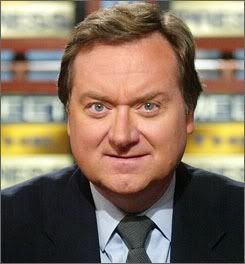
This morning I watched Tim Russert of Meet the Press, interview Senator Hillary Clinton. As one might expect, Russert challenged Clinton's numerous contortions about Iraq since 2002. Russert did a good job and perhaps I’m nitpicking but this error on his part stuck in my craw. Russert replayed Senator Clinton’s October 10, 2002 speech on the Senate floor. It’s a speech many of us bloggers have heard or read many times before, this passage in particular:
“In the four years since the inspectors left, intelligence reports show that Saddam Hussein has worked to rebuild his chemical and biological weapons stock, his missile delivery capability, and his nuclear program. He has also given aid, comfort, and sanctuary to terrorists, including Al Qaeda members, though there is apparently no evidence of his involvement in the terrible events of September 11, 2001.”
After playing the video Russert noted that:
“As we sit here this morning, Saddam rebuilding a nuclear weapons program, just not true; giving aid and sanctuary to al-Qaeda, debatable. .”
It is not debatable whether Saddam gave aid or sanctuary to Al Quaeda. The Washington Post, which has been an enthusiastic cheerleader for the neocons, and the Iraq War from the beginning reported the following on June 17, 2004:
“The Sept. 11 commission reported yesterday that it has found no 'collaborative relationship' between Iraq and al Qaeda, challenging one of the Bush administration's main justifications for the war in Iraq.”
Perhaps Russert misspoke when he said, “debatable” but the record needs to be corrected. Far too many Americans continue to believe Al Quaeda and Saddam Hussein had a relationship and justify the Iraq War because of it. This is not “debatable.”

Click here to let Tim Russert know he made a mistake and has a responsibility to correct the record.

Thursday

Unable to 'win', Bush Re-names the Enemy

Posted by The Existentialist Cowboy


Don Rumsfeld said that you go to war with the army you have --not the army you might want. Bush, losing his war against an enemy he didn't want, re-named it the enemy he does want. As a National Intelligence Estimate revealed that terrorism had gotten worse since 911, the Bush regime renames an insurgency (against which it was losing) "al Qaeda in Iraq" against which it hopes to win. Re-naming is easier than winning. The GOP rationale goes like this: if the GOP can but change the terminology, a war lost on the ground might yet be won in the focus group. It's the GOP way.

When people hear "al-Qaeda," it's natural that they think of Osama bin Laden and the Sept. 11 attacks. The insurgency, sectarian violence and opposition to the US occupation in Iraq are not about fighting al-Qaeda, but that's how Bush's fiasco there is being branded.

McClatchy Newspapers' Baghdad correspondent Mike Drummond exposed the sinister rhetorical shift, noting in a recent report, "US forces continue to battle Shiite militia in the south, as well as Shiite militia and Sunni insurgents in Baghdad. Yet America's most wanted enemy at the moment is Sunni al-Qaeda in Iraq. The Bush administration's recent shift toward calling the enemy in Iraq 'al-Qaeda' rather than an insurgency may reflect the difficulty in maintaining support for the war at home more than it does the nature of the enemy in Iraq."

--Al-Qaeda In Iraq Bush's Creation, Niagra Fall Reporter

"Al Qaeda in Iraq" might have been brilliant if it had not been so transparent. In three little words, Bush wraps up a complicated lie of several hundred words. Even the man who "read three Shakespeares" and a Camus in a single weekend would have problems with that many words. Bush's consultant would hope that just three little words might make the people forget that al Qaeda had not been in Iraq until the US attacked and invaded. Bush would hope that you forget that his policies have never and will never defeat terrorism of any sort at any time. The US in Iraq is a terrorist recruitment poster. Does it really matter what Bush calls those whom his and US presence recruits?

Informed of his many failures, Bush's response is typically GOP: blame the critics. About our nation's own intelligence agencies White House spokesman Peter Watkins is quoted in the Nation as having said "their hatred for freedom and liberty did not develop overnight. Those seeds were planted decades ago." This position is outrageous and incompetent. This utterly failed administration obviously lashes out blindly, stupidly at any criticism of his utterly failed and incompetent policies. Though Bush has never been right, he is never wrong. He's not "resolute", he's stubborn, stupid and pig headed. What are the odds that a man so lacking in talent or intelligence is so otherwise infallible and wise? But, he's not right about terrorism, he's the cause of it. He's not winning in Iraq, he's lost it. Winning implies an exit strategy that Bush doesn't have. Re-naming an "enemy" is not the same as defeating one.

For all those reasons, Bush's homestretch is no time to relax. His failure in Iraq, his sabre rattling toward Iran makes this period the most dangerous in his occupancy. Despite having been thoroughly discredited --not by critics but by facts --Bush persists in waging a messianic campaign. Until a new GOP focus group had done its work, Bush called our enemies "evil doers". I always found it interesting that Bush targeted only those "evil doers" who were oil rich. Poorer "evil doers" get a pass. The lesson the world learned from Bush is simply this: if you wish to do evil, liquidate your oil assets. Bush's zeal with respect to Islam may have consolidated radical theocratic zealots at home but inflamed and radicalized theocratic zealots abroad. Shakespeare was more eloquent. A plague o' both your houses.

If we can but avoid a nuclear holocaust despite Bush's best efforts to effect a nuclear armageddon, it will be a relief to see the end of Dick "Darth" Cheney, a goulish, snarling spector of no humanity and less good will toward man or beast. The list of those already departed this evil administration include John Ashcroft, a baritone whose tones we could bear no more easily than his contempt for the rules of evidence, due process, and or freedom of speech. Also gone is Al Gonzales who got the job because Bush wished to appear friendly to the fastest growing population segment in the US. Gonzales was Ashcroft with a tan with just as much antipathy to the principles of our founding --the Constitution, the Bill of Rights, the presumption of innocence.

It would seem that all Bushies have problems with the Fourth Amendment, about which the Bush line was that "reasonable suspicion" not "probable cause" was the standard upon which investigations and/or arrests were made. Not surprisingly, the Bushies are dead wrong. All one need do to end this stupid debate is to simply read the Fourth Amendment for one's self.

The right of the people to be secure in their persons, houses, papers, and effects, against unreasonable searches and seizures, shall not be violated, and no warrants shall issue, but upon probable cause, supported by oath or affirmation, and particularly describing the place to be searched, and the persons or things to be seized.

Amendment IV, Bill of Rights, US Constitution

Given the record of this administration, this Orwellian nightmare, it is surprising that the actual text of the Bill of Rights is still available. Perhaps, the de-centralized nature of information is the only thing not anticipated by Orwell, who foresaw every other outrage to civilization, Democracy, and the spirit of free inquiry and truth.

Bush who cannot pronounce "Machiavellian" ought not indulge Machiavellian machinations. That Bush thinks himself smart proves he's not. Bush labels "terrorist" anyone who disagrees with his stupid policies, his incompetent regime, his illegal war and occupation. Author E.L. Doctorow got it right when he called Bush the "unfeeling President". The lack of "feelings", the utter lack of empathy describes evil itself. And that's what he have soiling the White House with venom.

Doctorow might have added that Bush is also lazy and incurious. His arrogance is inversely proportional to his intelligence. Many world leaders have been liars but none so transparent. I want to play poker with Bush and then retire. Bush will leave a legacy of state-approved torture, illegal wiretapping and domestic surveillance, concentration camps, kidnappings, the coddling of corporate polluters.


The Creation of Doctorow's "Ragtime"

Sunday

Purgatory For Alan Greenspan

The topic below was originally posted on my blog, the Intrepid Liberal Journal as well as the Independent Bloggers Alliance, The Peace Tree and Worldwide Sawdust.

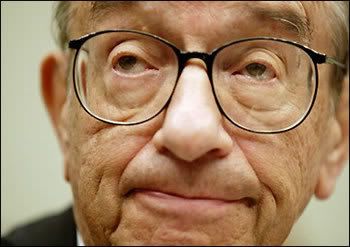
Alan Greenspan belongs to the Club of Emasculated Moderate Elites who enabled corporate theocrats to destroy the American Dream at home and annihilate our moral authority abroad. A prerequisite for membership is to first allow crazy ideologues to exploit their prestige and later disown the disastrous policies their reputations facilitated. Former Secretary of State Colin Powell is a charter member of this club and a pathetic figure who criticizes the Bush Administration about Iraq when it no longer matters. Powell’s domestic policy soul mate, Alan Greenspan, joined him with his new memoir, The Age of Turbulence: Adventures In a New World.


Actually, one could argue that Greenspan was a charter member as early as 2001. The prescient and sagacious Paul Krugman wrote the following for his column entitled “Reckonings; Doing the Wrong Thing” on February 14, 2001:
“Three weeks ago Alan Greenspan, in his now-famous testimony to the Senate Budget Committee, gave decisive aid and comfort to the advocates of huge, irresponsible tax cuts. Rumor has it that Mr. Greenspan himself was taken aback by the feeding frenzy unleashed by that testimony, and that he is now engaged in a backdoor campaign to limit the damage. (Damage to the nation, or to himself? Good question.) The Medley Report, a newsletter on economic affairs, says that ‘many Congressional Democrats have heard Mr. Greenspan -- or his aides -- tell them that he actually favors something like $1 trillion in total tax cuts rather than $1.6 trillion.’

But if those rumors are true, Mr. Greenspan's performance yesterday, in his first official testimony since he let the genie out of the bottle, was a profile in cowardice. Again and again he was offered the opportunity to say something that would help rein in runaway tax-cutting; each time he evaded the question, often replying by reading from his own previous testimony. He declared once again that he was speaking only for himself, thus granting himself leeway to pronounce on subjects far afield of his role as Federal Reserve chairman. But when pressed on the crucial question of whether the huge tax cuts that now seem inevitable are too large, he said it was inappropriate for him to comment on particular proposals.

In short, Mr. Greenspan defined the rules of the game in a way that allows him to intervene as he likes in the political debate, but to retreat behind the veil of his office whenever anyone tries to hold him accountable for the results of those interventions.”
The upshot is that Greenspan’s reputation in 2001 was at stratospheric levels following eight years of prosperity under President Clinton. It was a flawed prosperity to be sure, aided by the Internet bubble and trade policies that rewarded corporate elites at the expense of too many working people. Nevertheless, the fiscal management of the country was far superior under President Clinton and most were better off than they are today. Greenspan and Clinton Treasury Secretary Robert Rubin were regarded as the architects of an economic renaissance.

As Krugman illustrated in his column over six years ago, Greenspan allowed the tax cutting privatization fundamentalists to exploit his reputation so wayward congressional moderates would go along. And when he had the chance to correct the record and prevent the fiscal insanity to follow, he choked. As Krugman put it in that column’s final paragraph:
“Mr. Greenspan faced a test of character yesterday. He didn't have to admit to a mistake; to do the right thing, all he had to do was ‘clarify' his previous remarks. Yes, the headlines would have said ‘Greenspan Makes U-Turn.’ But isn't it worth accepting some brief personal embarrassment in order to head off a looming policy disaster that you yourself have helped create? Apparently not.”
And what a disaster it’s been! Even without 9/11 and the Iraq War, the tax cutting privatization fundamentalists had us headed toward a path of deficits minus meaningful investments. It’s one thing to accumulate deficits if we make investments in infrastructure and human capital that deliver a return such as education, health care, renewable energy, bridges and levies. Contrary to generations of conservative propaganda however, the super wealthy don't "invest" their wealth into the economy and create jobs. Most horde it because they don't need to spend frequently on necessities.

Greenspan's conduct in 2001 resulted in less money for people who truly are the engine of economic growth: small business entrepreneurs, salaried employees earning under $100,000 per year and low wage earners.

Yet Greenspan continues to reject any accountability for his transgressions. According to the New York Times, Greenspan is “chagrined about his role in the Bush tax cuts.” The article describes Greenspan as surprised at how his endorsement of the Bush tax cuts would be perceived even as he recounts how Robert Rubin and Senator Kent Conrad, of North Dakota warned him.

Yet Greenspan’s bewilderment is at best disingenuous. Rather like Claude Raines “shock” at finding gambling in Casablanca. He endorsed Bush’s tax cuts because they empowered the Ayn Rand economic fetishists who promote wealth redistribution in favor of the wealthy while claiming to champion liberty and a culture of work. Indeed, as Harriet Rubin reported in the New York Times, Greenspan was an admirer of Rand’s work.

As a reward for his disservice to the American people, Greenspan’s book will no doubt soon become a best seller as the republic spirals towards fiscal insolvency. That is Alan Greenspan’s legacy unless a true progressive is elected president in 2008. Either way Greenspan’s reputation should be condemned to a special purgatory for so-called moderates such as Colin Powell who mortgaged America’s standing and future for their own self-aggrandizement.

Friday

The Reverend does not mince his words


If that didn’t whet your appetite and push you to stand up and yell, “To hell with war!” might I entice you with some dessert?

Wednesday

do what we can!

please read the following post and the links that are included- the neo cons are pushing hard for war with iran- we need to stop them!!

crooks and liars- action alert on IRAN!!!!!
spread the word!!!

very sad

I'm Jus' A Lil' Dizzy!--Dizzy Dayz: Keeping Up With Our Spinning World: This Breaks My Heart

CONSPIRACY THEORY?

Don't you just hate 9-11 conspiracy theories?

conspiracy: con + spirare, from the Latin. To breathe together.

_____________________________


There are no coincidences

The Coincidence Theorist’s Guide to 9/11

-That governments have permitted terrorist acts against their own people, and have even themselves been perpetrators in order to find strategic advantage is quite likely true, but this is the United States we're talking about.

-That intelligence agencies, financiers, terrorists and narco-criminals have a long history together is well established, but the Nugan Hand Bank, BCCI, Banco Ambrosiano, the P2 Lodge, the CIA/Mafia anti-Castro/Kennedy alliance, Iran/Contra and the rest were a long time ago, so there’s no need to rehash all that.

-That was then, this is now!

-That Jonathan Bush’s Riggs Bank has been found guilty of laundering terrorist funds and fined a US-record $25 million must embarrass his nephew George, but it's still no justification for leaping to paranoid conclusions.

-That George Bush's brother Marvin sat on the board of the Kuwaiti-owned company which provided electronic security to the World Trade Centre, Dulles Airport and United Airlines means nothing more than you must admit those Bush boys have done alright for themselves.

-That George Bush found success as a businessman only after the investment of Osama’s brother Salem and reputed al Qaeda financier Khalid bin Mahfouz is just one of those things - one of those crazy things.

-That Osama bin Laden is known to have been an asset of US foreign policy in no way implies he still is.

-That al Qaeda was active in the Balkan conflict, fighting on the same side as the US as recently as 1999, while the US protected its cells, is merely one of history's little aberrations.

-The claims of Michael Springman, State Department veteran of the Jeddah visa bureau, that the CIA ran the office and issued visas to al Qaeda members so they could receive training in the United States, sound like the sour grapes of someone who was fired for making such wild accusations.

-That one of George Bush's first acts as President, in January 2001, was to end the two-year deployment of attack submarines which were positioned within striking distance of al Qaeda's Afghanistan camps, even as the group's guilt for the Cole bombing was established, proves that a transition from one administration to the next is never an easy task.

-That so many influential figures in and close to the Bush White House had expressed, just a year before the attacks, the need for a "new Pearl Harbor" before their militarist ambitions could be fulfilled, demonstrates nothing more than the accidental virtue of being in the right place at the right time.

-That the company PTECH, founded by a Saudi financier placed on America’s Terrorist Watch List in October 2001, had access to the FAA’s entire computer system for two years before the 9/11 attack, means he must not have been such a threat after all.

-That whistleblower Indira Singh was told to keep her mouth shut and forget what she learned when she took her concerns about PTECH to her employers and federal authorities, suggests she lacked the big picture. And that the Chief Auditor for JP Morgan Chase told Singh repeatedly, as she answered questions about who supplied her with what information, that "that person should be killed," suggests he should take an anger management seminar.

-That on May 8, 2001, Dick Cheney took upon himself the job of co-ordinating a response to domestic terror attacks even as he was crafting the administration’s energy policy which bore implications for America's military, circumventing the established infrastructure and ignoring the recommendations of the Hart-Rudman report, merely shows the VP to be someone who finds it hard to delegate.

-That the standing order which covered the shooting down of hijacked aircraft was altered on June 1, 2001, taking discretion away from field commanders and placing it solely in the hands of the Secretary of Defense, is simply poor planning and unfortunate timing. Fortunately the error has been corrected, as the order was rescinded shortly after 9/11.

-That in the weeks before 9/11, FBI agent Colleen Rowley found her investigation of Zacarias Moussaoui so perversely thwarted that her colleagues joked that bin Laden had a mole at the FBI, proves the stress-relieving virtue of humour in the workplace.

-That Dave Frasca of the FBI’s Radical Fundamentalist Unit received a promotion after quashing multiple, urgent requests for investigations into al Qaeda assets training at flight schools in the summer of 2001 does appear on the surface odd, but undoubtedly there's a good reason for it, quite possibly classified.

-That FBI informant Randy Glass, working an undercover sting, was told by Pakistani intelligence operatives that the World Trade Center towers were coming down, and that his repeated warnings which continued until weeks before the attacks, including the mention of planes used as weapons, were ignored by federal authorities, is simply one of the many "What Ifs" of that tragic day.

-That over the summer of 2001 Washington received many urgent, senior-level warnings from foreign intelligence agencies and governments - including those of Germany, France, Great Britain, Russia, Egypt, Israel, Morocco, Afghanistan and others - of impending terror attacks using hijacked aircraft and did nothing, demonstrates the pressing need for a new Intelligence Czar.

-That John Ashcroft stopped flying commercial aircraft in July 2001 on account of security considerations had nothing to do with warnings regarding September 11, because he said so to the 9/11 Commission.

-That former lead counsel for the House David Schippers says he’d taken to John Ashcroft’s office specific warnings he’d learned from FBI agents in New York of an impending attack – even naming the proposed dates, names of the hijackers and the targets – and that the investigations had been stymied and the agents threatened, proves nothing but David Schipper’s pathetic need for attention.

-That Garth Nicolson received two warnings from contacts in the intelligence community and one from a North African head of state, which included specific site, date and source of the attacks, and passed the information to the Defense Department and the National Security Council to evidently no effect, clearly amounts to nothing, since virtually nobody has ever heard of him.

-That in the months prior to September 11, self-described US intelligence operative Delmart Vreeland sought, from a Toronto jail cell, to get US and Canadian authorities to heed his warning of his accidental discovery of impending catastrophic attacks is worthless, since Vreeland was a dubious character, notwithstanding the fact that many of his claims have since been proven true.

-That FBI Special Investigator Robert Wright claims that agents assigned to intelligence operations actually protect terrorists from investigation and prosecution, that the FBI shut down his probe into terrorist training camps, and that he was removed from a money-laundering case that had a direct link to terrorism, sounds like yet more sour grapes from a disgruntled employee.

-That George Bush had plans to invade Afghanistan on his desk before 9/11 demonstrates only the value of being prepared. The suggestion that securing a pipeline across Afghanistan figured into the White House’s calculations is as ludicrous as the assertion that oil played a part in determining war in Iraq.

-That Afghanistan is once again the world’s principal heroin producer is an unfortunate reality, but to claim the CIA is still actively involved in the narcotics trade is to presume bad faith on the part of the agency. Mahmood Ahmed, chief of Pakistan’s ISI, must not have authorized an al Qaeda payment of $100,000 to Mohammed Atta days before the attacks, and was not meeting with senior Washington officials over the week of 9/11, because I didn’t read anything about him in the official report.

-That Porter Goss met with Ahmed the morning of September 11 in his capacity as Chairman of the House Permanent Select Committee on Intelligence has no bearing whatsoever upon his recent selection by the White House to head the Central Intelligence Agency.

-That Goss's congressional seat encompasses the 9/11 hijackers' Florida base of operation, including their flight schools, is precisely the kind of meaningless factoid a conspiracy theorist would bring up.

-It's true that George HW Bush and Dick Cheney spent the evening of September 10 alone in the Oval Office, but what's wrong with old colleagues catching up? And it's true that George HW Bush and Shafig bin Laden, Osama's brother, spent the morning of September 11 together at a board meeting of the Carlyle Group, but the bin Ladens are a big family.

-That FEMA arrived in New York on Sept 10 to prepare for a scheduled biowarfare drill, and had a triage centre ready to go that was larger and better equipped than the one that was lost in the collapse of WTC 7, was a lucky twist of fate.

-Newsweek’s report that senior Pentagon officials cancelled flights on Sept 10 for the following day on account of security concerns is only newsworthy because of what happened the following morning.

-That George Bush's telephone logs for September 11 do not exist should surprise no one, given the confusion of the day.

-That Mohamed Atta attended the International Officer's School at Maxwell Air Force Base, that Abdulaziz Alomari attended Brooks Air Force Base Aerospace Medical School, that Saeed Alghamdi attended the Defense Language Institute in Monterey merely shows it is a small world, after all.

-That Lt Col Steve Butler, Vice Chancellor for student affairs of the Defense Language Institute during Alghamdi's terms, was disciplined, removed from his post and threatened with court martial when he wrote "Bush knew of the impending attacks on America. He did nothing to warn the American people because he needed this war on terrorism. What is...contemptible is the President of the United States not telling the American people what he knows for political gain," is the least that should have happened for such disrespect shown his Commander in Chief.

-That Mohammed Atta dressed like a Mafioso, had a stripper girlfriend, smuggled drugs, was already a licensed pilot when he entered the US, enjoyed pork chops, drank to excess and did cocaine, was closer to Europeans than Arabs in Florida, and included the names of defence contractors on his email list, proves how dangerous the radical fundamentalist Muslim can be.

-That 43 lbs of heroin was found on board the Lear Jet owned by Wally Hilliard, the owner of Atta’s flight school, just three weeks after Atta enrolled – the biggest seizure ever in Central Florida – was just bad luck.

-That Hilliard was not charged shows how specious the claims for conspiracy truly are. That Hilliard’s plane had made 30-round trips to Venezuela with the same passengers who always paid cash, that the plane had been supplied by a pair of drug smugglers who had also outfitted CIA drug runner Barry Seal, and that 9/11 commissioner Richard ben-Veniste had been Seal’s attorney before Seal’s murder, shows nothing but the lengths to which conspiracists will go to draw sinister conclusions.

-Reports of insider trading on 9/11 are false, because the SEC investigated and found only respectable investors who will remain nameless involved, and no terrorists, so the windfall profit-taking was merely, as ever, coincidental.

-That heightened security for the World Trade Centre was lifted immediately prior to the attacks illustrates that it always happens when you least expect it.

-That Hani Hanjour, the pilot of Flight 77, was so incompetent he could not fly a Cessna in August, but in September managed to fly a 767 at excessive speed into a spiraling, 270-degree descent and a level impact of the first floor of the Pentagon, on the only side that was virtually empty and had been hardened to withstand a terrorist attack, merely demonstrates that people can do almost anything once they set their minds to it.

-That none of the flight data recorders were said to be recoverable even though they were located in the tail sections, and that until 9/11, no solid-state recorder in a catastrophic crash had been unrecoverable, shows how there's a first time for everything.

-That Mohammed Atta left a uniform, a will, a Koran, his driver's license and a "how to fly planes" video in his rental car at the airport means he had other things on his mind.

-The mention of Israelis with links to military-intelligence having been arrested on Sept 11 videotaping and celebrating the attacks, of an Israeli espionage ring surveiling DEA and defense installations and trailing the hijackers, and of a warning of impending attacks delivered to the Israeli company Odigo two hours before the first plane hit, does not deserve a response.

-That the stories also appeared in publications such as Ha'aretz and Forward is a sad display of self-hatred among certain elements of the Israeli media.

-That multiple military wargames and simulations were underway the morning of 9/11 – one simulating the crash of a plane into a building; another, a live-fly simulation of multiple hijackings – and took many interceptors away from the eastern seaboard and confused field commanders as to which was a real hijacked aircraft and which was a hoax, was a bizarre coincidence, but no less a coincidence.

-That the National Military Command Center ops director asked a rookie substitute to stand his watch at 8:30 am on Sept. 11 is nothing more than bad timing.

-That a recording made Sept 11 of air traffic controllers’ describing what they had witnessed, was destroyed by an FAA official who crushed it in his hand, cut the tape into little pieces and dropped them in different trash cans around the building, is something no doubt that overzealous official wishes he could undo.

-That the FBI knew precisely which Florida flight schools to descend upon hours after the attacks should make every American feel safer knowing their federal agents are on the ball.

-That a former flight school executive believes the hijackers were "double agents," and says about Atta and associates, "Early on I gleaned that these guys had government protection. They were let into this country for a specific purpose," and was visited by the FBI just four hours after the attacks to intimidate him into silence, proves he's an unreliable witness, for the simple reason there is no conspiracy.

-That Jeb Bush was on board an aircraft that removed flight school records to Washington in the middle of the night on Sept 12th demonstrates how seriously the governor takes the issue of national security. To insinuate evil motive from the mercy flights of bin Laden family members and Saudi royals after 9/11 shows the sickness of the conspiratorial mindset. Le Figaro’s report in October 2001, known to have originated with French intelligence, that the CIA met Osama bin Laden in a Dubai hospital in July 2001, proves again the perfidy of the French.

-That the tape in which bin Laden claims responsibility for the attacks was released by the State Department after having been found providentially by US forces in Afghanistan, and depicts a fattened Osama with a broader face and a flatter nose, proves Osama, and Osama alone, masterminded 9/11.

-That at the battle of Tora Bora, where bin Laden was surrounded on three sides, Special Forces received no order to advance and capture him and were forced to stand and watch as two Russian-made helicopters flew into the area where bin Laden was believed hiding, loaded up passengers and returned to Pakistan, demonstrates how confusing the modern battlefield can be.

-That upon returning to Fort Bragg from Tora Bora, the same Special Operations troops who had been stood down from capturing bin Laden, suffered a unusual spree of murder/suicides, is nothing more than a series of senseless tragedies.

-Reports that bin Laden is currently receiving periodic dialysis treatment in a Pakistani medical hospital are simply too incredible to be true.

-That the White House went on Cipro September 11 shows the foresightedness of America’s emergency response.

-That the anthrax was mailed to perceived liberal media and the Democratic leadership demonstrates only the perversity of the terrorist psyche.

-That the anthrax attacks appeared to silence opponents of the Patriot Act shows only that appearances can be deceiving.

-That the Ames-strain anthrax was found to have originated at Fort Detrick, and was beyond the capability of all but a few labs to refine, underscores the importance of allowing the investigation to continue without the distraction of absurd conspiracy theories.

-That Republican guru Grover Norquist has been found to have aided financiers and supporters of Islamic terror to gain access to the Bush White House, and is a founder of the Islamic Institute, which the Treasury Department believes to be a source of funding for al Qaeda, suggests Norquist is at worst, naive, and at best, needs a wider circle of friends.

-That the Department of Justice consistently chooses to see accused 9/11 plotters go free rather than permit the courtroom testimony of al Qaeda leaders in American custody looks bad, but only because we don't have all the facts.

-That the White House balked at any inquiry into the events of 9/11, then starved it of funds and stonewalled it, was unfortunate, but since the commission didn't find for conspiracy it's all a non issue anyway.

-That the 9/11 commission's executive director and "gatekeeper," Philip Zelikow, was so closely involved in the events under investigation that he testified before the the commission as part of the inquiry, shows only an apparent conflict of interest.

-That commission chair Thomas Kean is, like George Bush, a Texas oil executive who had business dealings with reputed al Qaeda financier Khalid bin Mafouz, suggests Texas is smaller than they say it is.

-That co-chair Lee Hamilton has a history as a Bush family "fixer," including clearing Bush Sr of the claims arising from the 1980 "October Surprise", is of no concern, since only conspiracists believe there was such a thing as an October Surprise.

-That FBI whistleblower Sibel Edmonds accuses the agency of intentionally fudging specific pre-9/11 warnings and harboring a foreign espionage ring in its translation department, and claims she witnessed evidence of the semi-official infrastructure of money-laundering and narcotics trade behind the attacks, is of no account, since John Ashcroft has gagged her with the rare invocation of "State Secrets Privilege," and retroactively classified her public testimony. For the sake of national security, let us speak no more of her.

-That, when commenting on Edmond's case, Daniel Ellsberg remarked that Ashcroft could go to prison for his part in a cover-up, suggests Ellsberg is giving comfort to the terrorists, and could, if he doesn't wise up, find himself declared an enemy combatant.

_____________________________

Whew... After reading this don't you just hate conspiracy theories?

Me too. Which is why I posted the above instead.


A big thanks to RIGOROUS INTUITION (V.2.0) for it is their original post that you just read.


LinkWithin

Related Posts with Thumbnails